Booking choice: The Phantom of the Opera, from $87 per person. Check dates Tour details
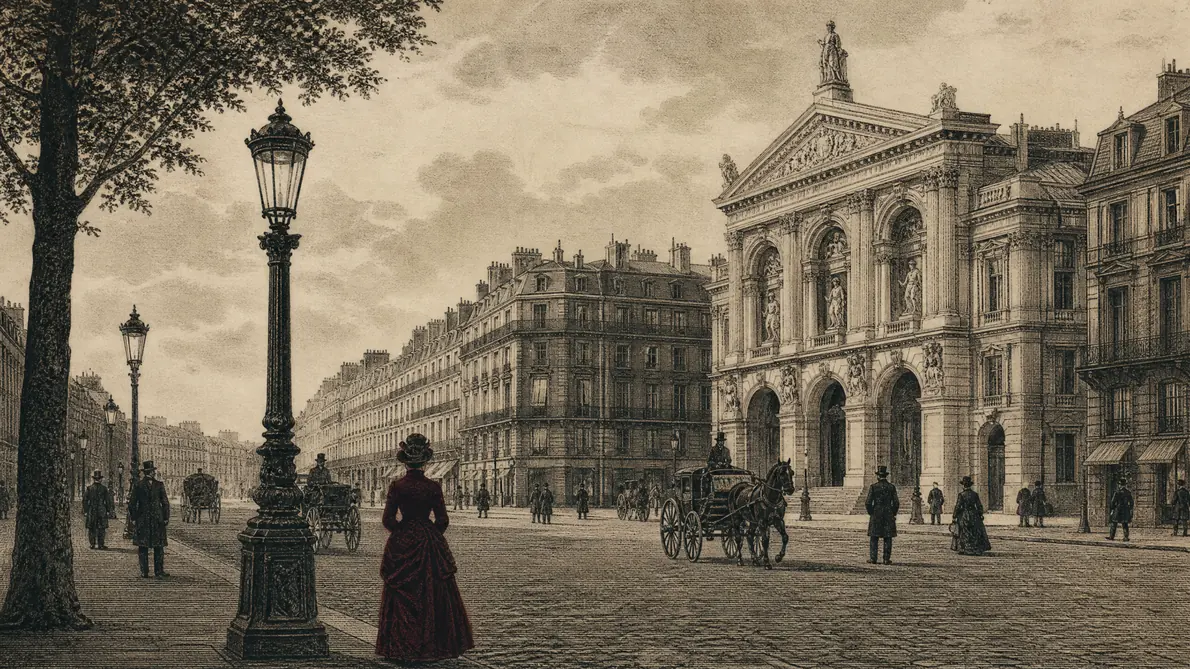
In 1820 the Grands Boulevards, laid out on the line of the old city wall, were on their way to becoming the Paris street of theatres and cafes. That year, on the site of a cafe and an old parish cemetery, a theatre went up in less than three months. It opened just before Christmas, and it has been playing ever since.
This guide follows its two centuries: why it is called the Gymnase, the Duchess of Berry, the authors who made its name, the redecorated hall, the 20th-century premieres, Marie Bell, and the producer who bought it in 2026.
The quick answer
The Théâtre du Gymnase opened on 23 December 1820 as a practice stage for students of the Paris Conservatoire, which is where its name comes from. Scribe, Dumas fils, Bernstein and Genet wrote for it, and the tragedian Marie Bell ran it from 1962 until 1985. A listed historic monument, in 2026 it was bought by the producer Jean-Marc Dumontet.
Why is it called the Théâtre du Gymnase?
Because it began as a training stage. A gymnase is a place for exercise, and here young actors from the Conservatoire were meant to exercise their craft, body and mind.
The idea came in 1820 from one Lugan de La Rozerie, who wanted a Paris stage where beginners could play in front of an audience. The French Wikipedia article explains the name: a gymnase is a place for exercises of the body and the mind. The license came with strict conditions. Students could perform works from the repertoire of the Comédie-Française and the Opéra, but only cut down, with longer plays reduced to one act.
The first director, Delestre-Poirson, ran it as that practice theatre for students of the Conservatoire. The strict rules did not last long, but the name stayed.
And no, it has nothing to do with sport. People searching for a gym on the Grands Boulevards sometimes land here; what they find is red velvet and a stage.
When was the Théâtre du Gymnase built, and how did it open?
In 1820, in less than three months, by the architects Rougevin and Guerchy. It opened on 23 December 1820 with a vaudeville prologue by Eugène Scribe named after its own street.
The theatre's own history gives the details. The site had been occupied by the Café Vasparo, and part of it was once the cemetery of Notre-Dame-de-Bonne-Nouvelle, closed before the Revolution. Auguste Rougevin and Louis-Régnier de Guerchy built the house at record speed.
For the opening night, the theatre dates it 23 December 1820, the audience saw a prologue in vaudeville by Scribe, Moreau and Mélesville called Le Boulevard de Bonne-Nouvelle, and Molière's L'Amour médecin squeezed into one act, its ballets and interludes cut. (The French Wikipedia article gives an October date and a different bill; we follow the theatre.)
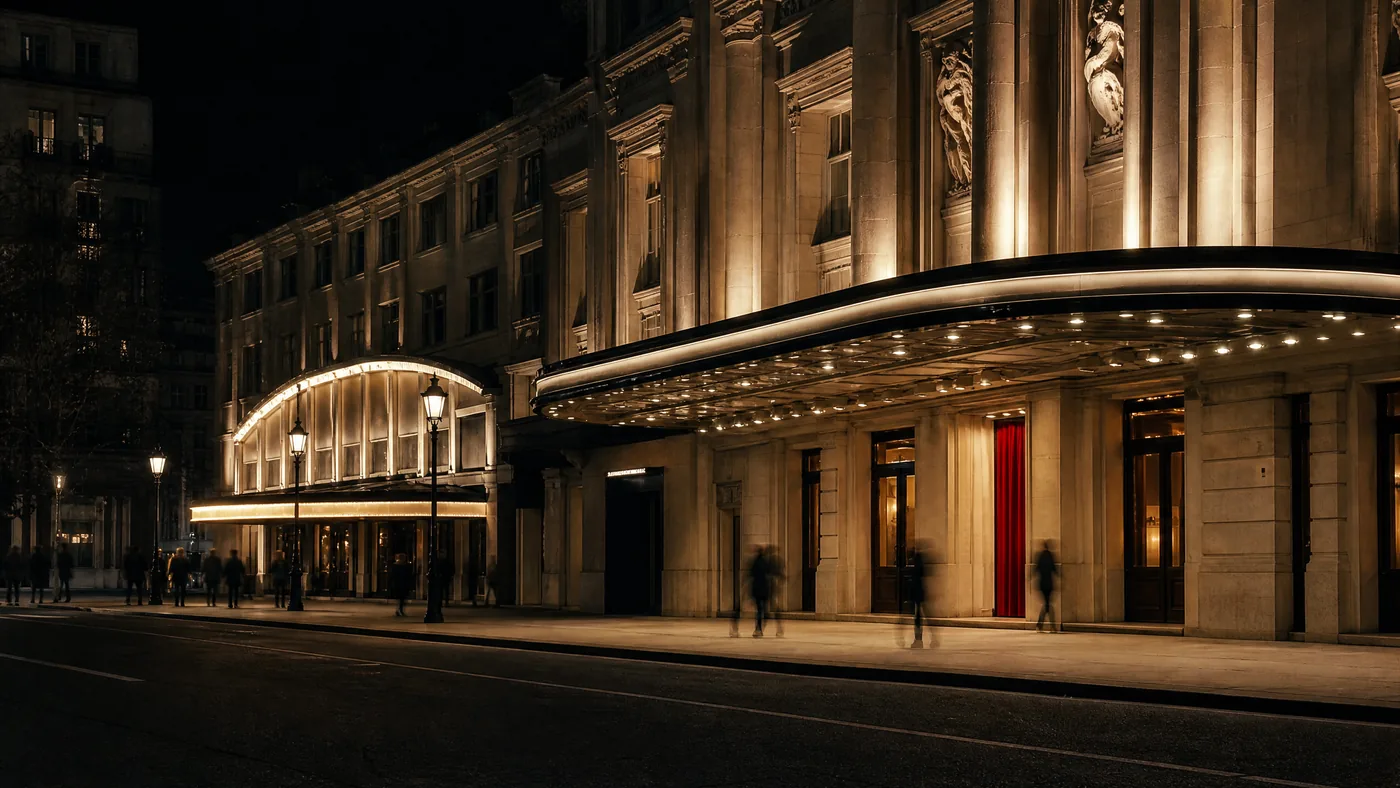
Two centuries later the house still stands at the same address, number 38, facing the Grand Rex across the boulevard.
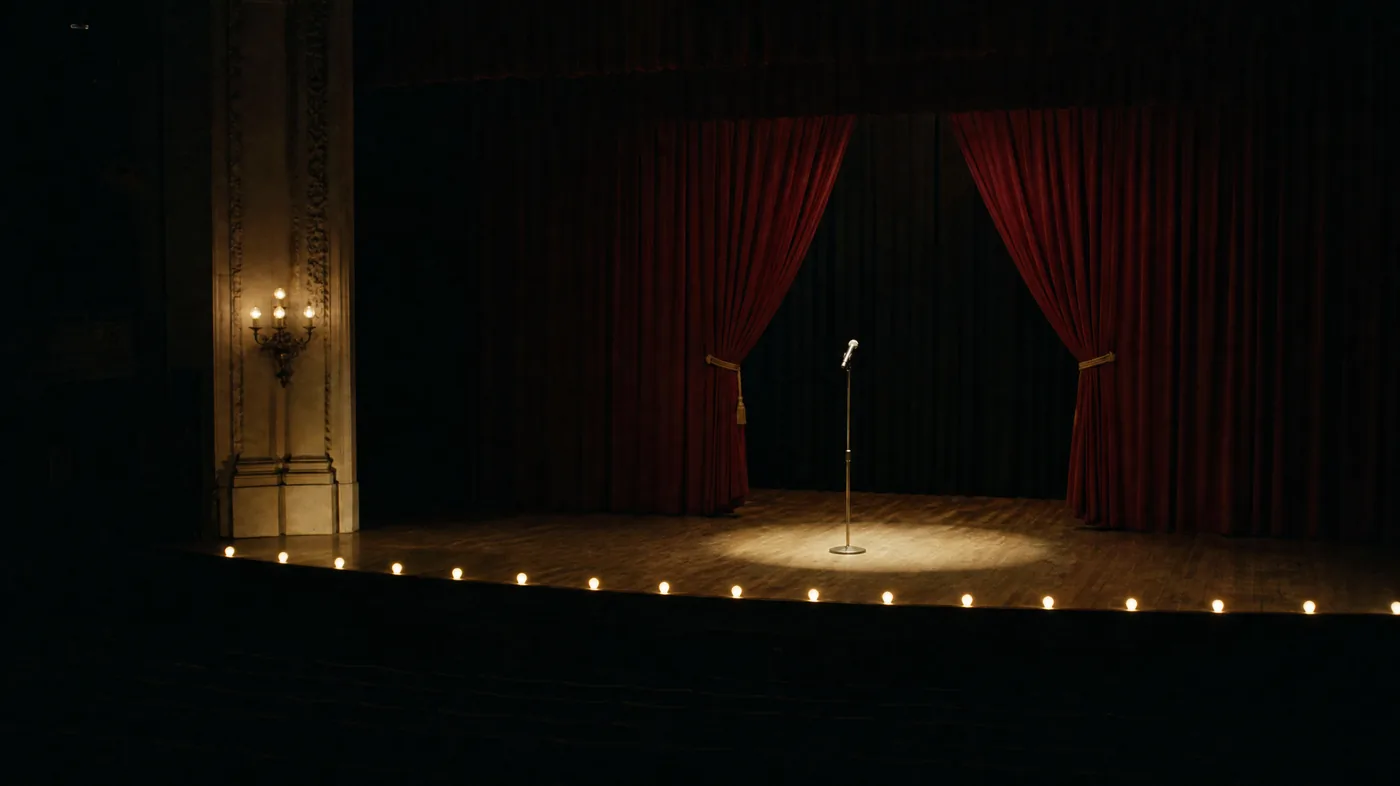
See the 200-year-old hall lit for a show: the Phantom of the Opera in the main hall.
Check dates for The Phantom of the OperaWhat was the Théâtre de Madame?
The Gymnase's name from 1824 to 1830, when it enjoyed the patronage of the Duchess of Berry, known at court as Madame. After the July Revolution it became the Gymnase Dramatique again.
Delestre-Poirson was a canny manager. From 1823 he lit his theatre with gas, one of the first in Paris to do so. He signed the playwright Eugène Scribe to an exclusive contract, and slowly stretched the rules from one-act pieces to plays of two and then three acts.
In the summer of 1824 he sent his company to Dieppe to entertain the Duchess of Berry. The favor was returned: the theatre was allowed to call itself the Théâtre de Madame. Parisians loved its light, cheerful comedies, though a Scribe play of 1829, Avant, pendant et après, annoyed the court with its liberal leanings.
The theatre closed for repairs in June 1830. After the July Revolution it reopened as the Gymnase Dramatique, a name it has never really left.
Which great authors wrote for the Gymnase in the 19th century?
Scribe first, then, under the director Montigny from 1844, Balzac, George Sand, Émile Augier, Alexandre Dumas father and son, Sardou and Labiche.
For about 25 years the Gymnase stood for Scribe's well-behaved comedies of family virtue. When Montigny took over in 1844, he noticed the public tiring of pure, poor and virtuous heroines and steered the house toward the sentimental drama of passion and scandal. A critic of 1864, Charles Monselet, wrote that the Gymnase now had "a magnifying glass for every scandal".
The authors followed. Balzac, George Sand, Émile Augier, Edmond About, Octave Feuillet and Victorien Sardou were played here. Labiche's comedy Le Voyage de monsieur Perrichon had its premiere at the Gymnase in 1860, and Meilhac and Halévy gave it Fanny Lear in 1868 and Frou-Frou a year later.
Above all there was Alexandre Dumas fils. The theatre's own history calls him the ideal dramatist of this second age, as Scribe had been of the first.
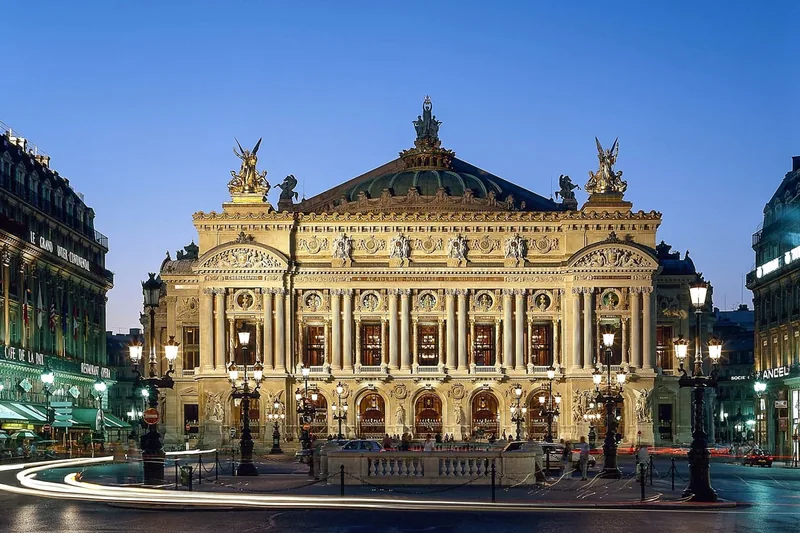
The Paris opera house where Gaston Leroux set his phantom: the grand staircase, the foyer and the salons, at your own pace.
Explore the Palais Garnier Tour detailsHow did the hall get its look?
Through a transformation in the 1880s. After Montigny's death, the new director Victor Koning had the architect Charles de Lalande rework the theatre, with a new curtain and a painted ceiling.
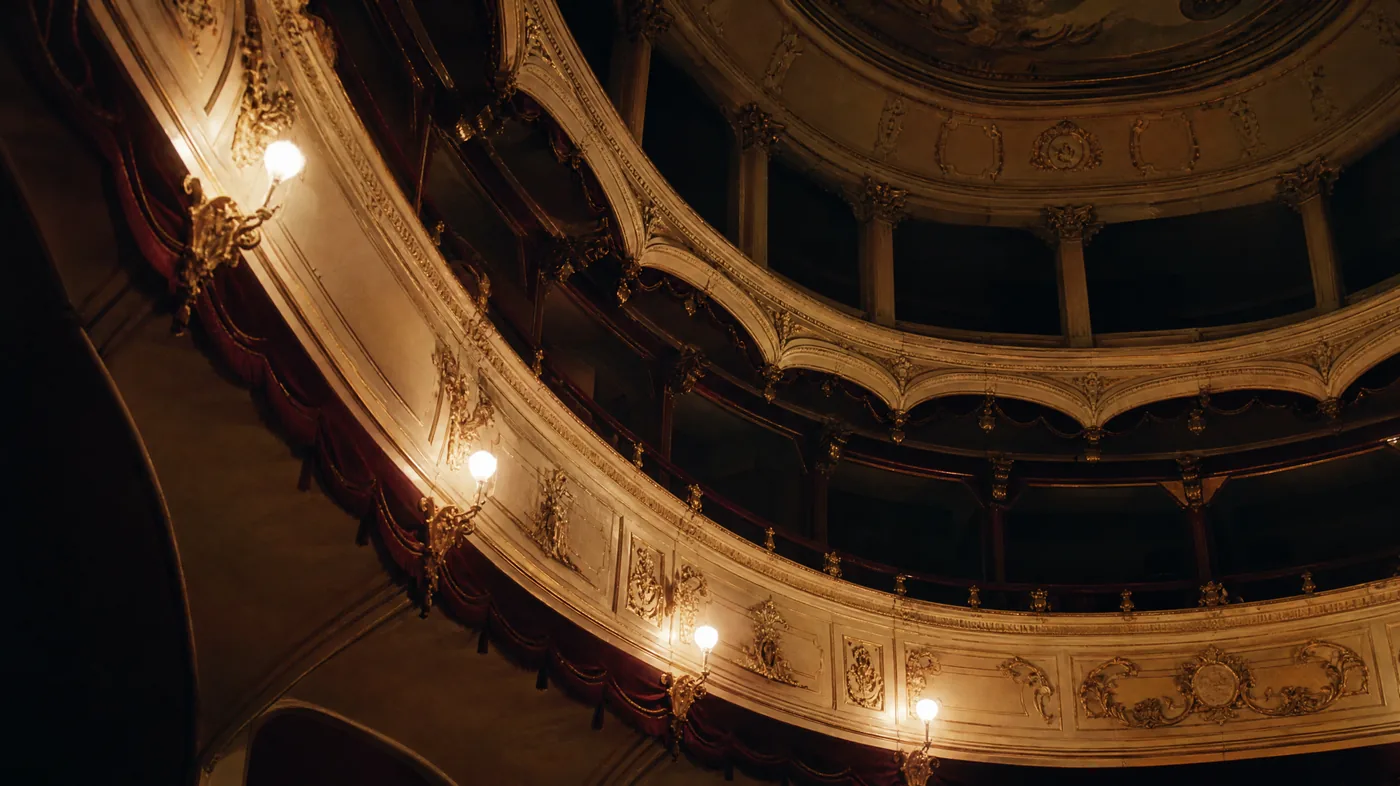
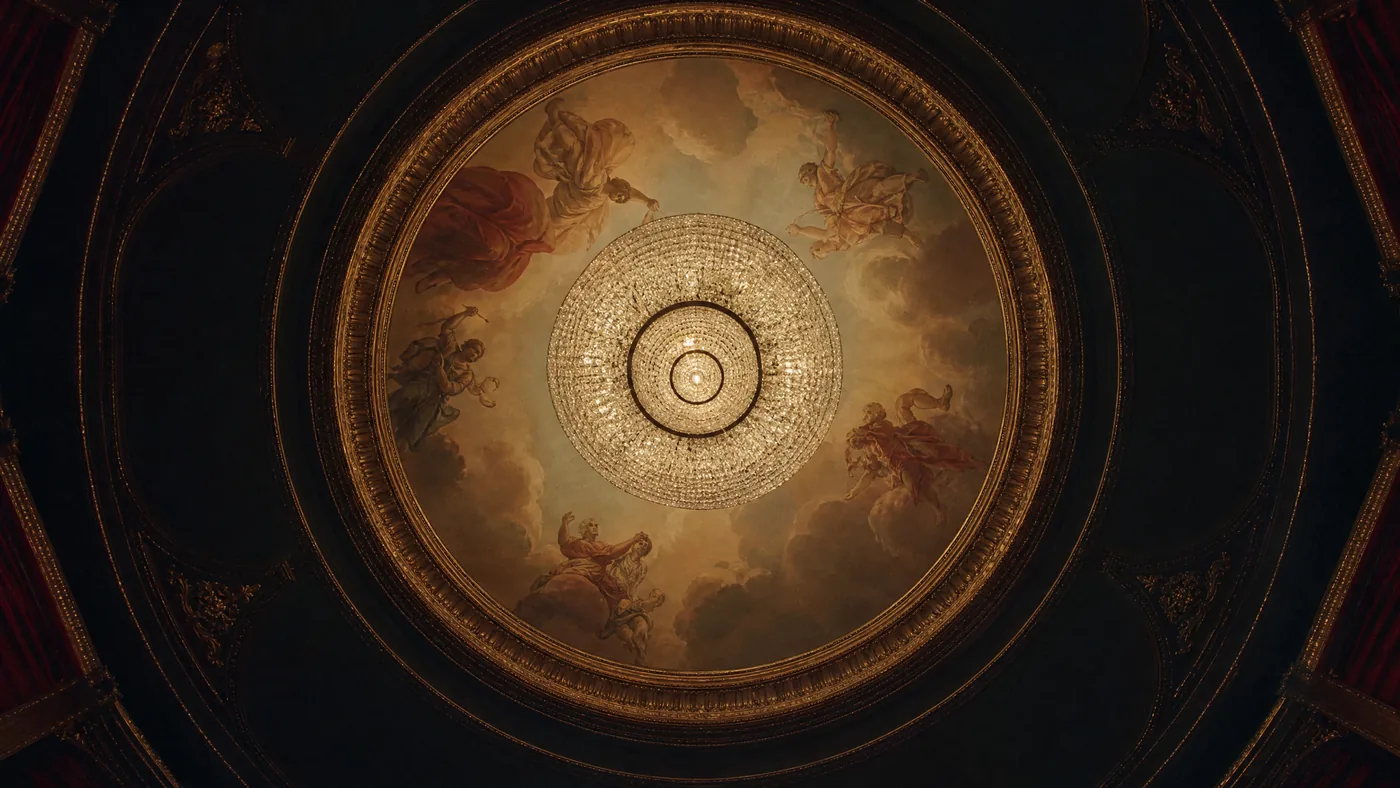
Montigny died in 1880, and Victor Koning took over that summer. Koning brought in Charles de Lalande, who transformed the building and gave it a vestibule with a peristyle. The hall was entirely redecorated: Alfred Rubé and Philippe Chaperon painted the stage curtain, and Compan and Plumet painted the ceiling with allegories of the seasons.
That Italian-style hall, on five levels, is the one audiences sit in today. Its reception rooms, with gilding, moldings and painted ceilings, were renovated in June 2023, the theatre says.
Next time you are in the stalls, look up before the lights go down. Where the seats are best for each kind of show is in our seating guide.
Which 20th-century writers had their plays at the Gymnase?
Henry Bernstein, who became director in 1926, then Marcel Pagnol, Jean Cocteau, Sacha Guitry, Félicien Marceau and Jean Genet, with Le Balcon staged here in 1960 by Peter Brook.
The playwright Henry Bernstein had premiered many of his works at the Gymnase, Samson, La Rafale, Mélo and Le Bonheur among them, before he took over as director in 1926. In 1939 Paule Rolle succeeded him and staged Pagnol's Jazz and Cocteau's Les Parents terribles. The Cocteau play, banned by the censor eight days after its 1938 premiere elsewhere, came back here in 1946 with a young Serge Reggiani.
Sacha Guitry played Toc and Debureau on the stage where his father had made his debut. Félicien Marceau's La Bonne Soupe followed, and in 1960 Peter Brook directed Jean Genet's Le Balcon.
Cinema came too: Antoine de Caunes shot his 2007 film about the comedian Coluche, Coluche : l'histoire d'un mec, at the Gymnase.
Two centuries of premieres, one evening: the Phantom on the Gymnase's main stage.
Check dates for The Phantom of the OperaWho was Marie Bell?
A great French tragedian, born Marie-Jeanne Bellon-Downey in Bègles, famous for Racine's Phèdre. She ran the Gymnase from 1962 until her death in 1985, and the theatre now bears her name.
Marie Bell was born on 23 December 1900 in Bègles, near Bordeaux, eighty years to the day after the theatre's opening night. She joined the Comédie-Française in 1921 and became one of its stars. Her Phèdre made history: André Malraux said that seeing Marie Bell in Phèdre was a unique chance for anyone who wanted to know what French genius was.
During the Occupation she was one of the directors of the Front national du théâtre, a Resistance group of theatre people, and she received the Légion d'honneur. She also played avant-garde theatre, Jean Genet among it, and acted in films.
From 1962 she directed the Gymnase. Yves Montand triumphed there in Des clowns par milliers, Michel Bouquet played Pinter's No Man's Land, and Coluche and the Splendid troupe came through. She died on 14 August 1985, and Jacques Bertin, her administrator since 1975, took over in August 1985. The house was renamed the Théâtre du Gymnase Marie-Bell in her honor.
Who owns the Théâtre du Gymnase today, and is it a historic monument?
The producer Jean-Marc Dumontet bought it in 2026. Since 1 February 1994 the building has been a listed historic monument.
Jean-Marc Dumontet runs JMD Production and owns several Paris stages: the Théâtre Antoine, Bobino, the Théâtre Libre, the Point-Virgule and the Salle Gaveau. The Gymnase is his latest purchase, and this season one of his shows crossed over: The Phantom of the Opera, which played the Théâtre Antoine last season, opened in the Gymnase's main hall on 8 October 2026.
The listing as a historic monument (inscription, in French terms) dates from 1 February 1994 and covers a theatre of more than 200 years. The program keeps the old mix of the Gymnase: plays, musicals, comedy and family shows across three halls. What is on now and next is in our guide to the shows, and the 2027 openings are in our new season post.
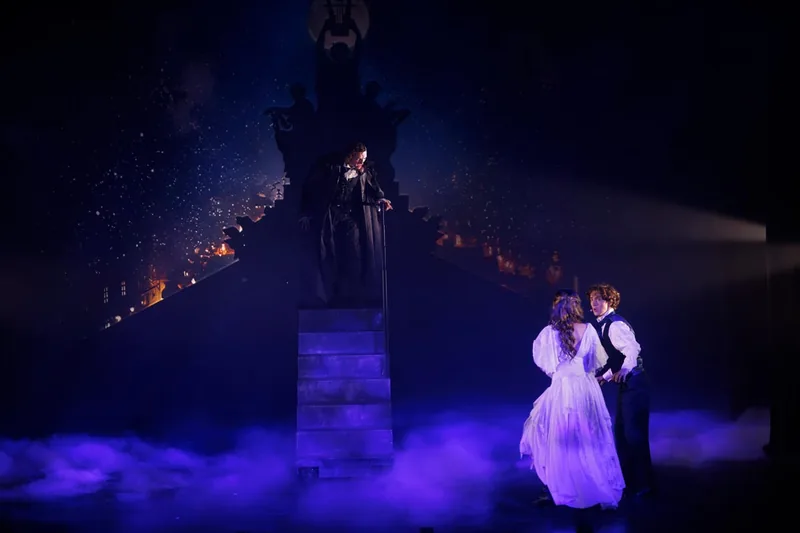
Gaston Leroux's masked phantom in the Gymnase's red and gold hall, sung in French with surtitles in English and Chinese, until 17 January 2027.
Explore The Phantom of the Opera Tour detailsFrequently asked questions
When was the Théâtre du Gymnase built?
In 1820, in less than three months, by the architects Rougevin and Guerchy. It opened on 23 December 1820.
Is the Théâtre du Gymnase a gym?
No. It is a theatre. The name comes from its first purpose, a practice stage where young actors from the Conservatoire exercised their craft.
Why is it called the Gymnase Marie-Bell?
It honors the tragedian Marie Bell, who ran the theatre from 1962 until her death in 1985. It was renamed after her in 1985.
Who is the director of the Théâtre du Gymnase?
The producer Jean-Marc Dumontet bought the theatre in 2026 and runs it with his company, JMD Production.
Ready to book
Choose your show
The Phantom of the Opera at the Théâtre du Gymnase: free cancellation up to 24 hours before; Secret Covered Passages Walking Tour: free cancellation up to 24 hours before; Palais Garnier Self-Guided Visit: non-refundable. Prices are from-prices in USD and move with the season.
The Phantom of the Opera at the Théâtre du Gymnase
- A ticket for The Phantom of the Opera
- The Gymnase's main hall, 38 boulevard de Bonne-Nouvelle
- Surtitles in English and Chinese
Palais Garnier Self-Guided Visit
- Entry to the public areas of the Palais Garnier
- The grand staircase and the grand foyer
- The library-museum and the salons