Booking choice: How to Become a Parisian, from $26 per person. Check dates Tour details
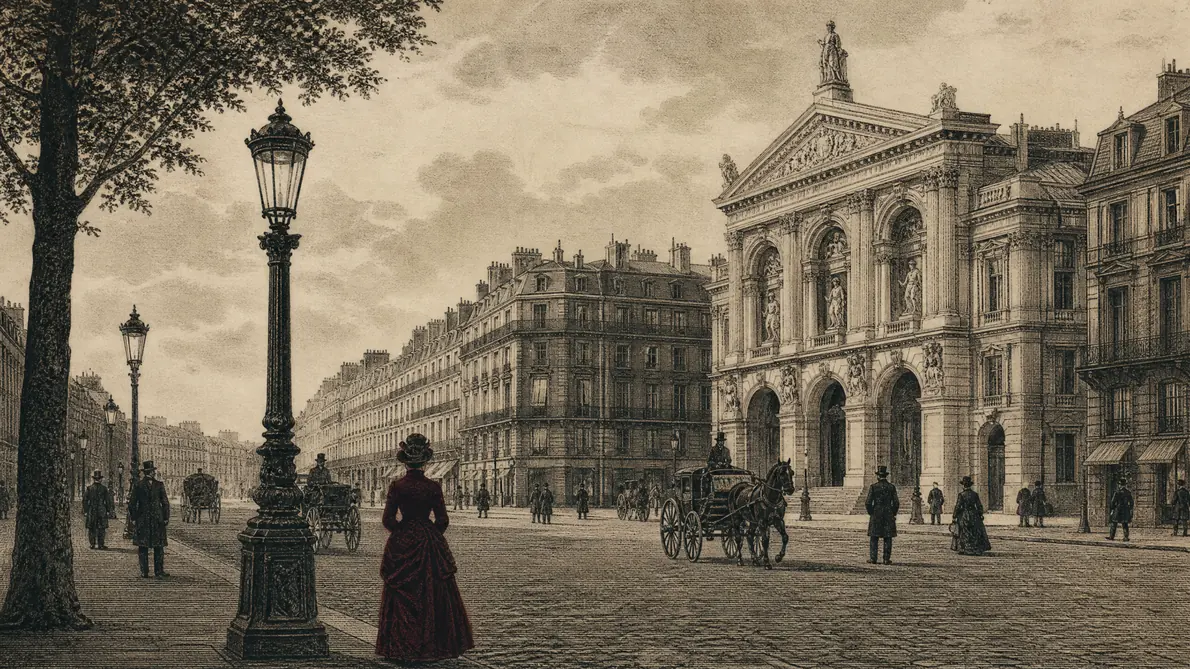
The Grands Boulevards follow the line of old city walls on the Right Bank. Once the walls came down, the space became a broad promenade, and where Parisians strolled, theatres, cafes and shows followed. The phrase "théâtre de boulevard", for popular comedy, still carries the memory.
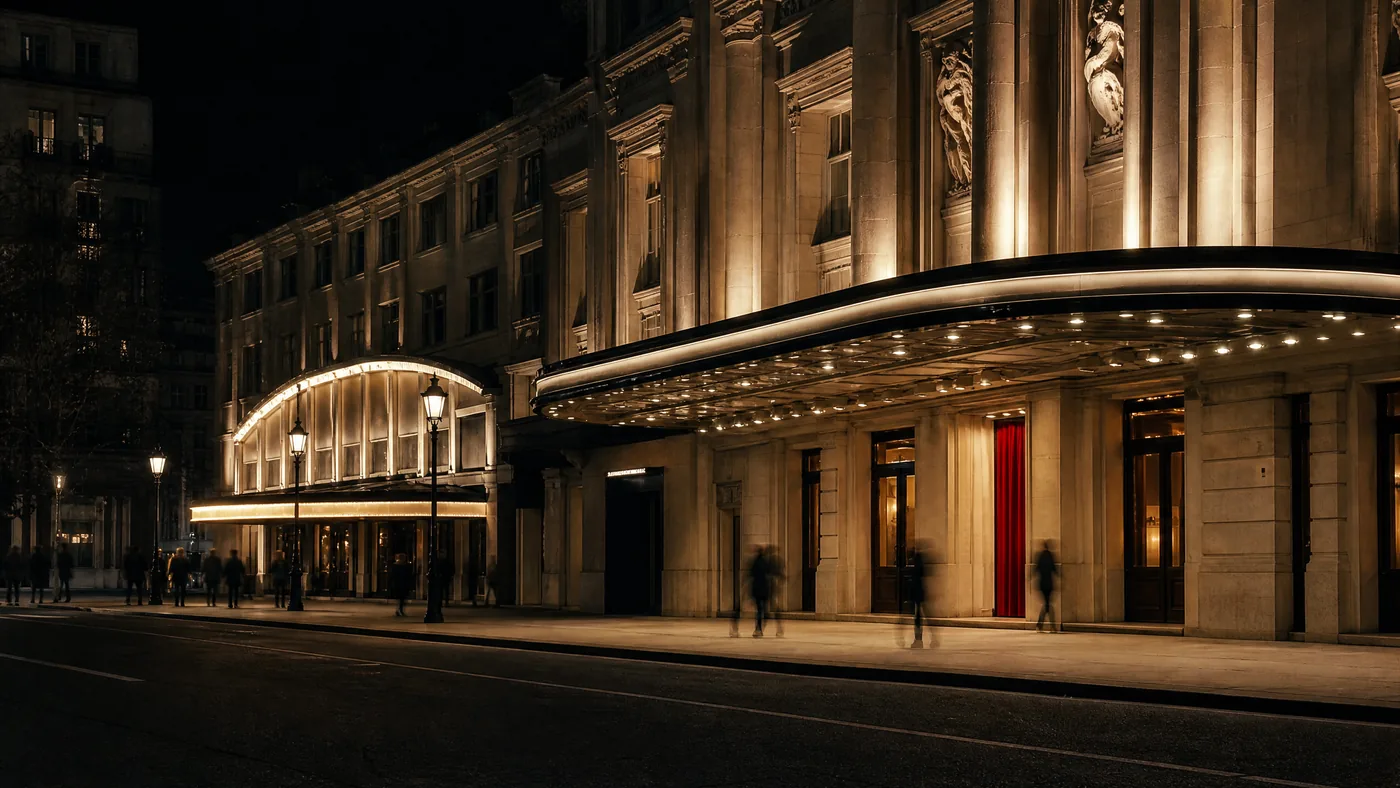
The Théâtre du Gymnase Marie-Bell sits in the middle of this chain, on boulevard de Bonne-Nouvelle. Within a few minutes' walk you find another century-old playhouse with comedy in English, a 1930s cinema palace, a wax museum from 1882 and three of the city's prettiest covered passages.
The quick answer
The Grands Boulevards run from the Madeleine to the Bastille along the line of the old walls. Around the Théâtre du Gymnase you find the Théâtre des Nouveautés, the Théâtre des Variétés, the Théâtre Antoine, the Grand Rex, the Grévin museum and the Panoramas, Jouffroy and Verdeau passages. The Palais Garnier stands near the western end.
What are the Grands Boulevards?
A chain of wide streets on the Right Bank, laid out from the 1670s where the old city walls stood, from boulevard de la Madeleine to boulevard Beaumarchais.
English Wikipedia traces them to a plan of Jean-Baptiste Colbert, minister to Louis XIV. The walls were pulled down and replaced by a ring of boulevards, starting in 1670, and new triumphal gates went up on the main roads: the Porte Saint-Denis in 1672 to 1673 and the Porte Saint-Martin in 1674. Both still stand, a few minutes east of the Gymnase.
From west to east, the chain runs boulevard de la Madeleine, des Capucines, des Italiens, Montmartre, Poissonnière, de Bonne-Nouvelle, Saint-Denis, Saint-Martin, du Temple, des Filles-du-Calvaire and Beaumarchais. Boulevard de Bonne-Nouvelle, home of the Gymnase, was laid out under letters patent of July 1676, says French Wikipedia, and given a minimum width of 35 meters in the 1840s.
| Venue | Address | What it is |
|---|---|---|
| Théâtre du Gymnase Marie-Bell | 38 boulevard de Bonne-Nouvelle | Theatre of 1820, three halls |
| Grand Rex | 1 boulevard Poissonnière | Cinema palace of 1932, studio tour |
| Théâtre des Nouveautés | 24 boulevard Poissonnière | Theatre of 1921, comedy in English |
| Théâtre des Variétés | 7 boulevard Montmartre | Theatre of 1807, Offenbach's home stage |
| Musée Grévin | 10 boulevard Montmartre | Wax museum, opened 1882 |
| Passage des Panoramas | 11 boulevard Montmartre | Covered passage of 1800 |
| Théâtre Antoine | 14 boulevard de Strasbourg | Theatre of 1866 |
| Théâtre BO Saint-Martin | 19 boulevard Saint-Martin | Small theatre, comedy in English |
Why did the boulevards become Paris's theatre district?
Because they became the place to stroll. Fairground theatres set up near the Porte Saint-Martin in the 18th century, and the boulevard du Temple turned into the famous boulevard du Crime.
English Wikipedia describes how the idea of the boulevard as a place for leisure took hold in the 18th century, when many fairground theatres opened near the Porte Saint-Martin. During the Restoration, the boulevard du Temple earned the nickname "boulevard du Crime" for the murders acted out nightly on its stages. One almanac of the time kept count: a single actor stabbed more than 16,000 times, another poisoned 11,000 times.
Baron Haussmann's rebuilding of Paris swept away most of the boulevard du Crime in the 1860s, but the spirit stayed. "Théâtre de boulevard" became the French name for popular comedy of manners, and the boulevards from Bonne-Nouvelle to Montmartre kept their theatres, their cafes and their evening crowds. Writers noticed: Maupassant set Bel-Ami there.
The Gymnase itself opened in 1820, in the middle of this rise, with a prologue by Eugène Scribe titled "Le Boulevard de Bonne-Nouvelle", a nod to its own street. Its full story is in our history of the Gymnase.
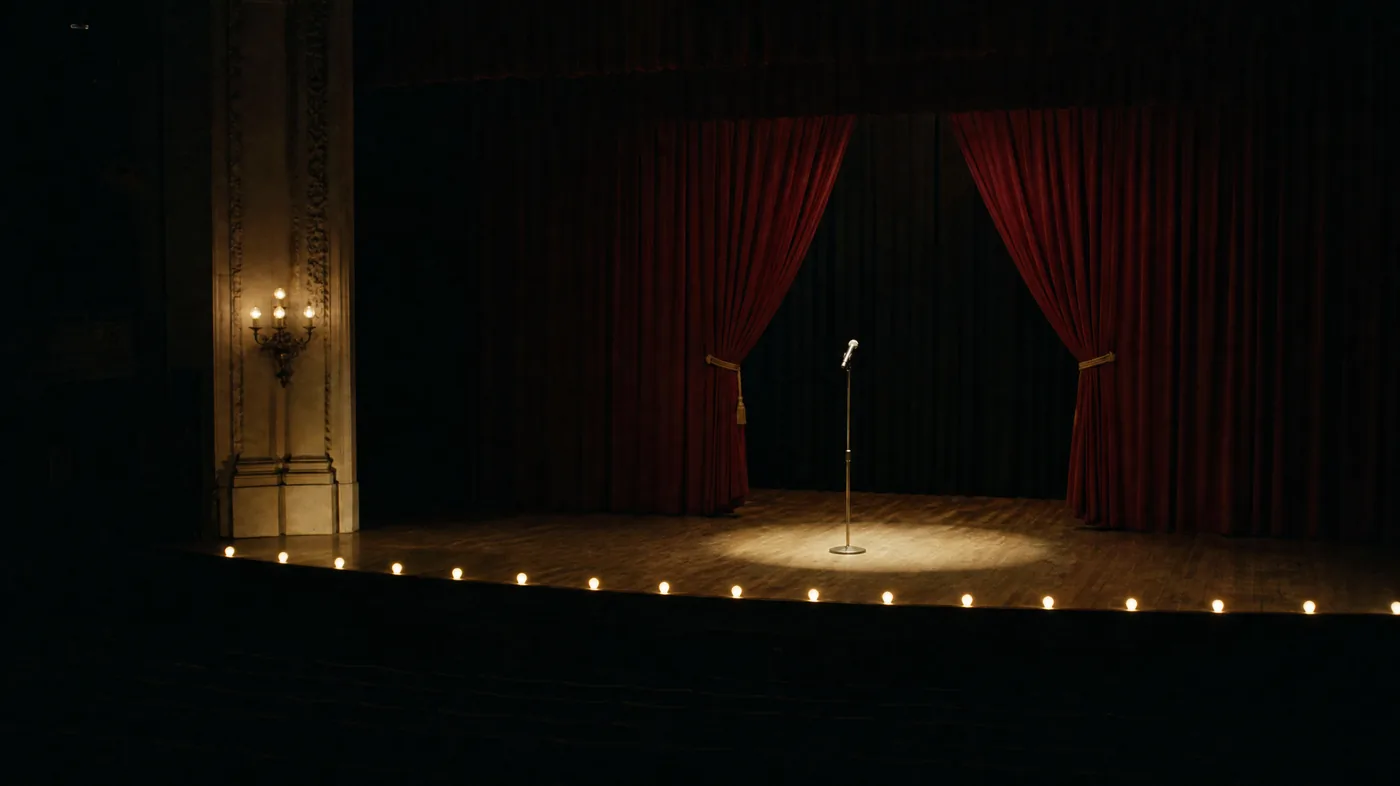
How to Become a Parisian: an hour of comedy in English in a century-old boulevard theatre.
Check dates for How to Become a ParisianWhat is special about the Théâtre du Gymnase Marie-Bell?
It is one of the old boulevard theatres still at work: an Italian-style hall on five levels from 1820, listed as a historic monument, with about 800 seats and two smaller halls.
Built in under three months by the architects Rougevin and Guerchy, it opened on 23 December 1820 as a practice stage for students of the Conservatoire, which is where the name "Gymnase" comes from. It has been a private theatre ever since, run in turn by Montigny, Henry Bernstein and the actress Marie Bell, who directed it from 1962 until 1985 and gave it her name. Jean-Marc Dumontet bought it in 2026.
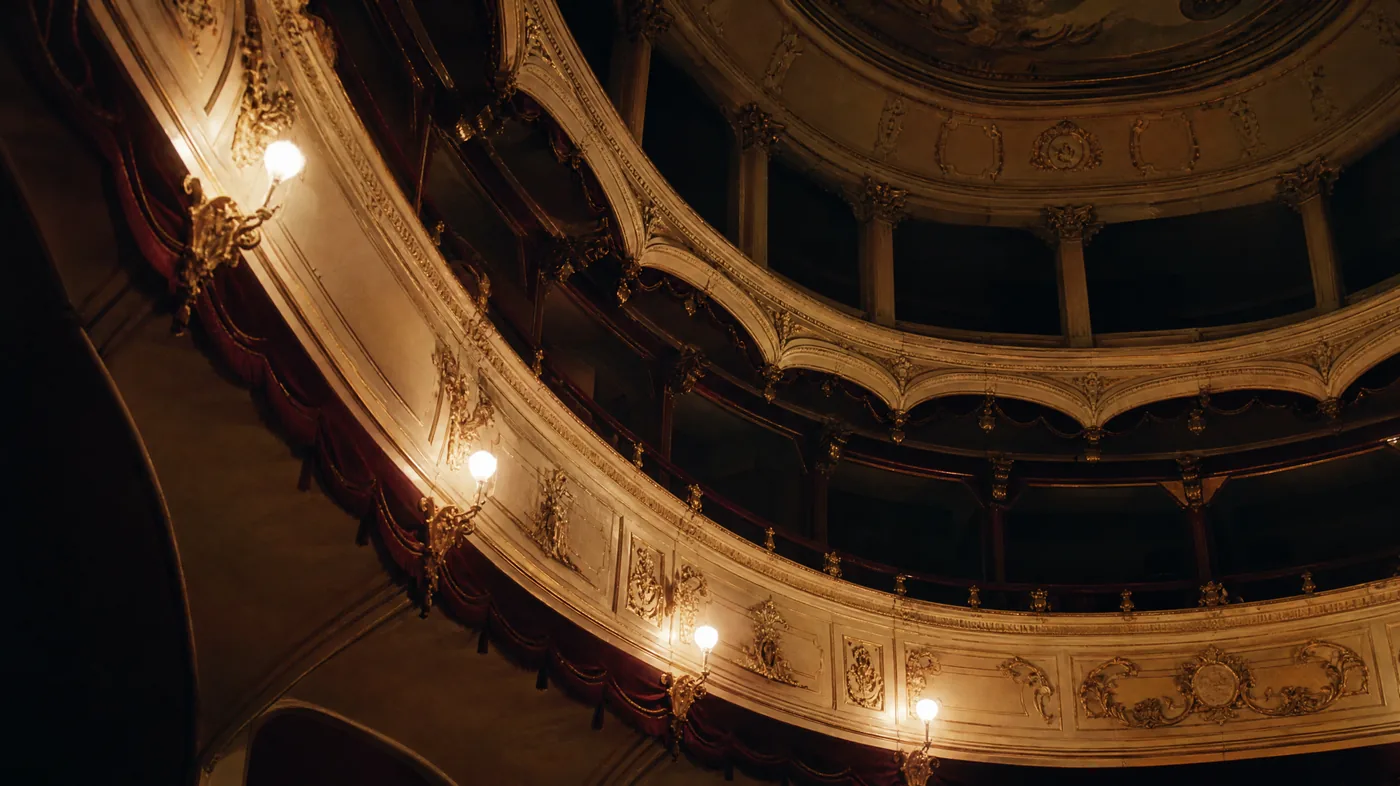
Inside, it is the classic picture of a Paris theatre: red velvet, gilded balconies, boxes stacked to the ceiling. Behind the main hall are the Petit Gymnase, about 160 seats, and the Studio Marie-Bell, about 90 seats under a vaulted stone ceiling. This winter the main hall plays The Phantom of the Opera, a French musical with English surtitles, until 17 January 2027.
The full program is in our guide to what is on, and the levels and seat names are explained in the seating guide.
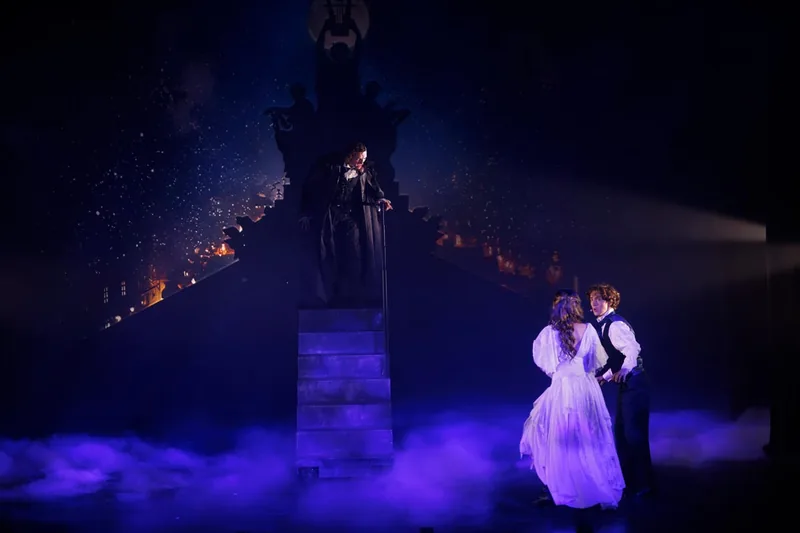
The Phantom of the Opera in the Gymnase's main hall, with English surtitles, until 17 January 2027.
Explore The Phantom of the Opera Tour detailsWhich other theatres are on the boulevards near the Gymnase?
The Théâtre des Nouveautés and the Théâtre des Variétés to the west, on boulevards Poissonnière and Montmartre. The Théâtre Antoine and the Théâtre BO Saint-Martin are to the east.
Théâtre des Nouveautés. At 24 boulevard Poissonnière, a few minutes' walk west. English Wikipedia says the present hall opened on 21 April 1921, built by the architect Adolf Tiers with 585 seats, and specialized in operettas and comedies. Today it is the home of How to Become a Parisian, the long-running comedy in English about Parisian manners.
Théâtre des Variétés. At 7 boulevard Montmartre, beside the entrance of the Passage des Panoramas. It was inaugurated on 24 June 1807, and Offenbach's La belle Hélène and La Grande-Duchesse de Gérolstein had their premieres there.
Théâtre Antoine. At 14 boulevard de Strasbourg, just north of the Porte Saint-Denis. It opened in 1866 as the Théâtre des Menus-Plaisirs. The director André Antoine brought his Théâtre Libre company there in 1888, and by 1897 the house carried his name. Like the Gymnase, it now belongs to Jean-Marc Dumontet, and it was the first Paris home of The Phantom of the Opera musical last season.
Théâtre BO Saint-Martin. At 19 boulevard Saint-Martin, a small room of 80 seats where Oh My God She's Parisian! plays its one-woman comedy in English.
French Wikipedia also notes the Jamel Comedy Club at 42 boulevard de Bonne-Nouvelle, a few doors from the Gymnase, opened in 2006 for new stand-up talent.
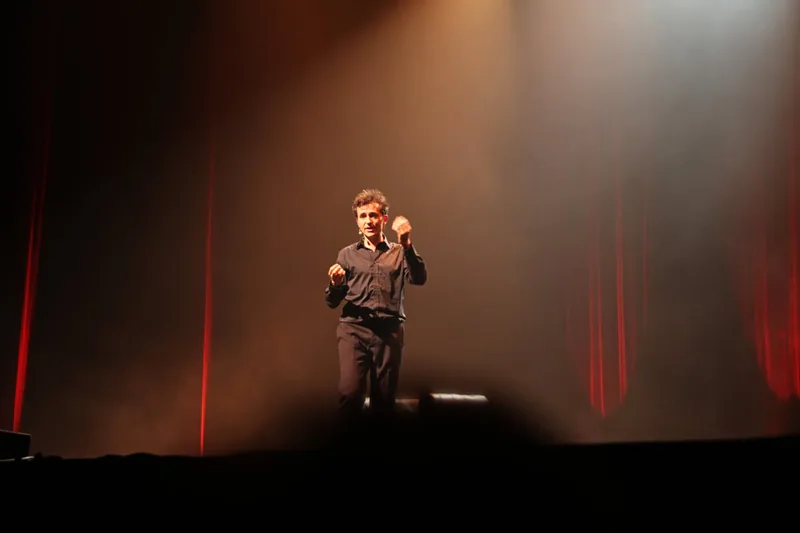
Comedy in English about Parisians at the Théâtre des Nouveautés, a few minutes west of the Gymnase.
Explore How to Become a Parisian Tour detailsWhat is the Grand Rex, across from the Gymnase?
A cinema palace that opened in December 1932, with an Art Deco facade and a great hall of about 2,700 to 2,800 seats. It runs a studio tour behind the scenes.
English Wikipedia gives the opening night as 8 December 1932, with Louis Lumière among some 3,300 guests. The architect Auguste Bluysen and the engineer John Eberson designed it, and its great hall is an "atmospheric" one with a Mediterranean-style setting. It has been a listed historic monument since 1981. Its address is 1 boulevard Poissonnière, and it faces the Gymnase across the boulevard.
The Rex Studios tour takes 50 minutes behind the scenes: the backstage areas, archive images, film sets, special effects and tricks, and the building's original 1932 decor. At the lowest price on this site, it is an easy add-on before a show at the Gymnase. All the details are on our Grand Rex studio tour page.
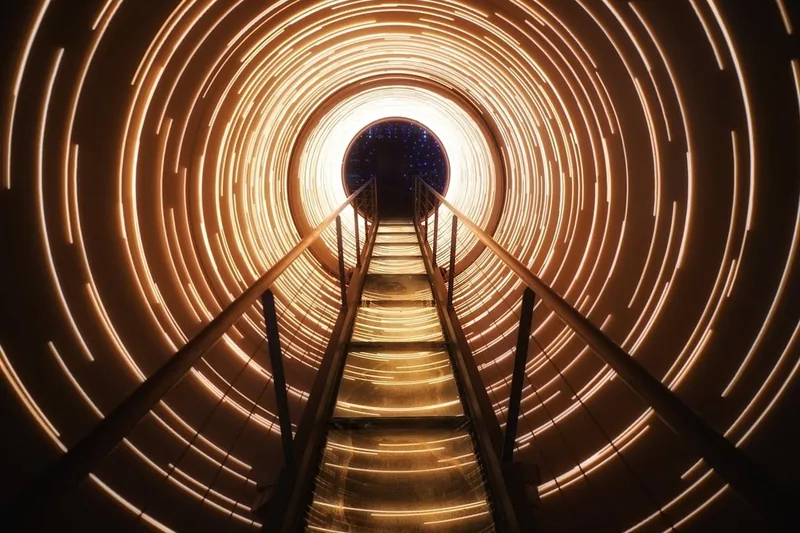
Fifty minutes behind the screen of the Grand Rex, with film sets, special effects and its 1932 decor.
Explore the Grand Rex studio tour Tour detailsWhere is the Grévin wax museum?
At 10 boulevard Montmartre, a few minutes west of the Gymnase. It opened in 1882 and shows more than 250 wax figures of French and international stars.
English Wikipedia credits the idea to the newspaper editor Arthur Meyer and the cartoonist Alfred Grévin, who opened a wax-figure gallery next to the Passage Jouffroy on 10 January 1882. It became the Musée Grévin, and its exit still leads out into the passage, so a visit ends under the glass roof.
Inside, the GetYourGuide listing promises more than 250 celebrities, a sound and light show at the entrance and new figures added through the year. It is a good hour with children before a family show at the Gymnase, such as Potted Potter or La Belle et la Bête. See our Grévin museum page.
More than 250 wax stars on boulevard Montmartre, a few minutes west of the Gymnase.
Check dates for the Grévin museumWhich covered passages are near the Grands Boulevards?
The Passage des Panoramas, the Passage Jouffroy and the Passage Verdeau, in a line across boulevard Montmartre, plus Passage Brady to the east.
The covered passages are the shopping arcades of 19th-century Paris. English Wikipedia lists what they share: they link two streets, have glass roofs, are for pedestrians only, are lit at night (first by gas lamps) and are lined with small shops. About 25 survive. Three of the best sit in a row a few minutes west of the Gymnase:
| Passage | Date | Entrances |
|---|---|---|
| Passage des Panoramas | 1800 | 11 boulevard Montmartre, 10 rue Saint-Marc |
| Passage Jouffroy | 1845 | 10-12 boulevard Montmartre, 9 rue de la Grange-Batelière |
| Passage Verdeau | 1847 | 6 rue de la Grange-Batelière, 31 bis rue du Faubourg-Montmartre |
| Passage Brady | 1828 | 43 rue du Faubourg-Saint-Martin, 33 boulevard de Strasbourg |
You can walk them in one line. Leave the Panoramas on boulevard Montmartre, cross the road into the Jouffroy, then cross rue de la Grange-Batelière into the Verdeau. The Jouffroy is the technical star: English Wikipedia calls it the first Paris passage built entirely of metal and glass, and the first heated through the floor.
The covered passages walk takes two hours with a guide, with shop fronts, cast-iron and glass roofs and the history behind them.
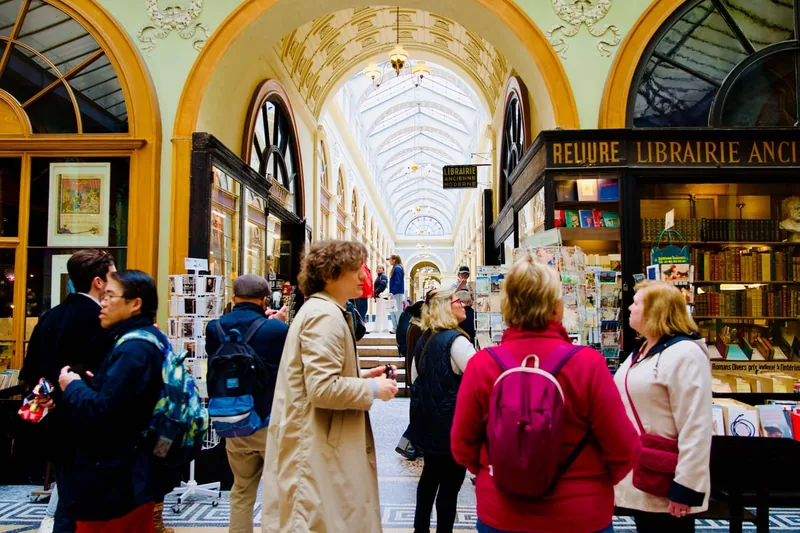
Glass roofs, cast iron and old shop fronts: a two-hour guided walk through the covered passages.
Explore the covered passages walk Tour detailsAre the Palais Garnier and the Moulin Rouge near the Grands Boulevards?
The Palais Garnier stands near the western end of the boulevards, a short metro ride from the Gymnase. The Moulin Rouge is further north, at 82 boulevard de Clichy.
Palais Garnier. The opera house of the Phantom story. It was inaugurated in 1875 and named after its young architect, Charles Garnier, and Gaston Leroux set his phantom in its cellars and boxes. The self-guided visit takes about 90 minutes and opens the grand staircase, the grand foyer, the salons and the library-museum. This winter it also includes the exhibition "Les Révolutions du Ring", from 27 October 2026 to 20 February 2027. Rehearsals can close the auditorium itself without notice. See our Palais Garnier page.
Moulin Rouge. The famous cabaret at the foot of Montmartre, on boulevard de Clichy. Its show, Féerie, puts 100 artists on stage in costumes of feathers, rhinestones and sequins, and the listing includes half a bottle of champagne. Elegant dress is required: no shorts, sportswear or sports shoes. See our Moulin Rouge page.
One idea for two nights: the Palais Garnier by day and the Phantom at the Gymnase that evening, then the Moulin Rouge the next night. For the first evening, our getting there guide covers every metro line to the theatre.
The grand staircase and foyer of the Palais Garnier, the opera house of the Phantom story, at your own pace.
Check dates for the Palais GarnierFrequently asked questions
Which theatres are on the Grands Boulevards?
Among others, the Théâtre du Gymnase Marie-Bell, the Théâtre des Nouveautés, the Théâtre des Variétés and, just off them, the Théâtre Antoine, plus the Grand Rex cinema.
What is théâtre de boulevard?
The French name for popular comedy, after the boulevard theatres where it thrived in the 19th century.
Is the Grand Rex near the Théâtre du Gymnase?
Yes. The Grand Rex stands directly across the boulevard from the Gymnase, at 1 boulevard Poissonnière.
Which covered passages are closest to the Gymnase?
The Passage des Panoramas, the Passage Jouffroy and the Passage Verdeau, in a line across boulevard Montmartre a few minutes west.
Ready to book
Choose your show
Free cancellation up to 24 hours before on every option. Prices are from-prices in USD and move with the season.
How to Become a Parisian: Comedy Show in English
- A ticket for How to Become a Parisian
- A photo with the comedian
- Théâtre des Nouveautés, 24 boulevard Poissonnière